Juliet E. Morrow, ASU-Jonesboro Research Station
Artifact of the Month - September 2026
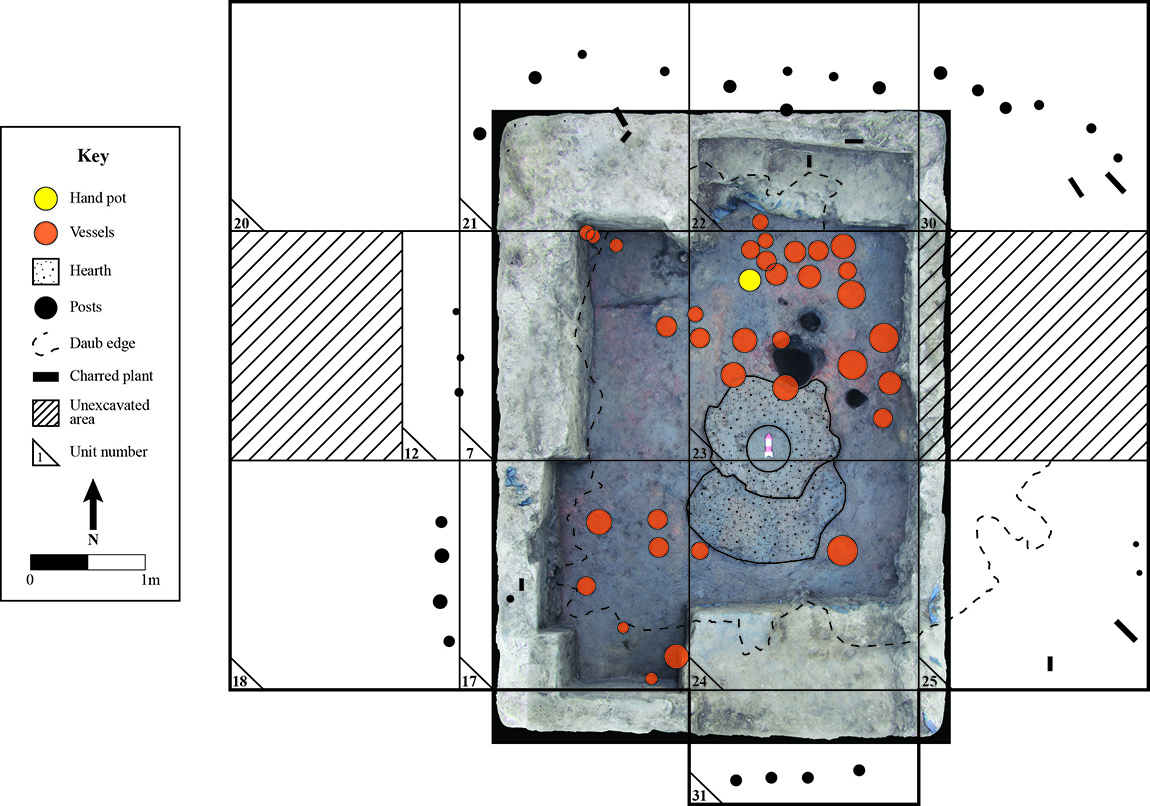
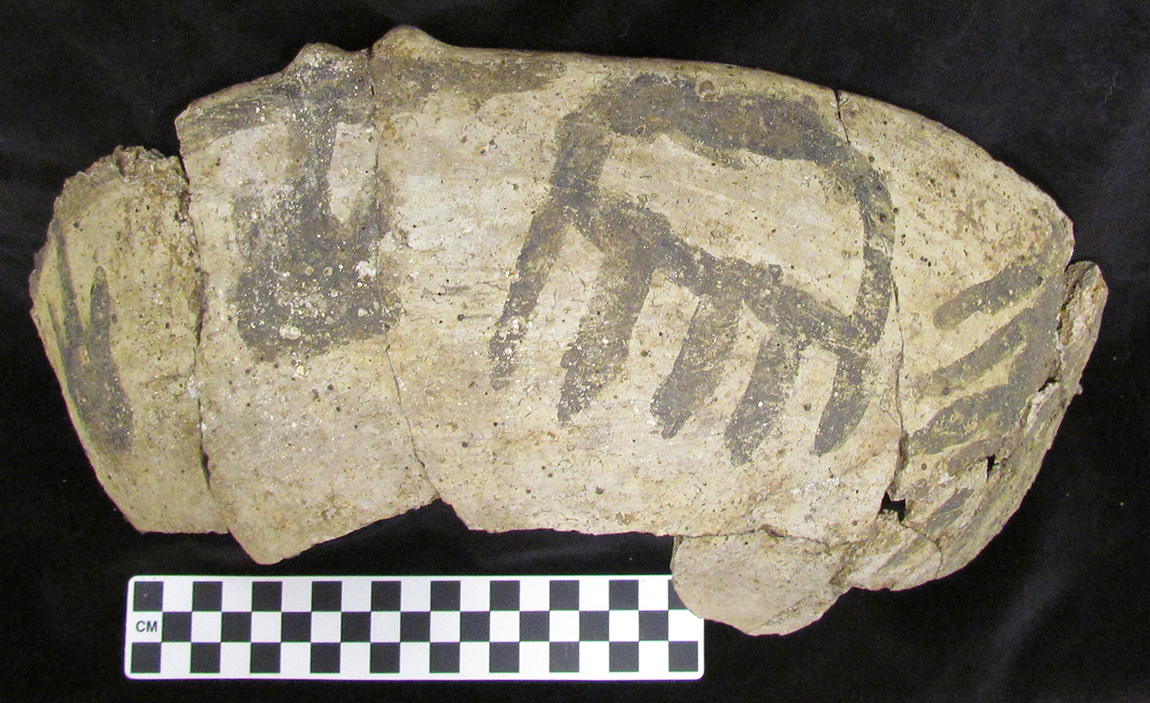
This Terminal Mississippian shell-tempered pottery bowl was recovered from the floor of House 1 at the Greenbrier site (Figures 1-3). ASU-Jonesboro Station Assistant Sarah Stuckey refitted the pot using natural glue so that I could determine the outlines of the painted motifs. One motif appears to be raccoon hindquarters, another is a hand with five fingers, and another is what could be an arthropod on the edge of the bowl. Hand motifs typically depict a celestial portal or the "Path of Souls" guiding the deceased to the Milky Way. The arthropod may represent Grandmother Spider who is a manifestation of Earth Mother. Or it may present a scorpion. George Lankford’s research aligns the constellation Scorpio (the Great Serpent) with the guardian and ruler of the underworld portal, representing the final destination or threshold on the celestial journey.
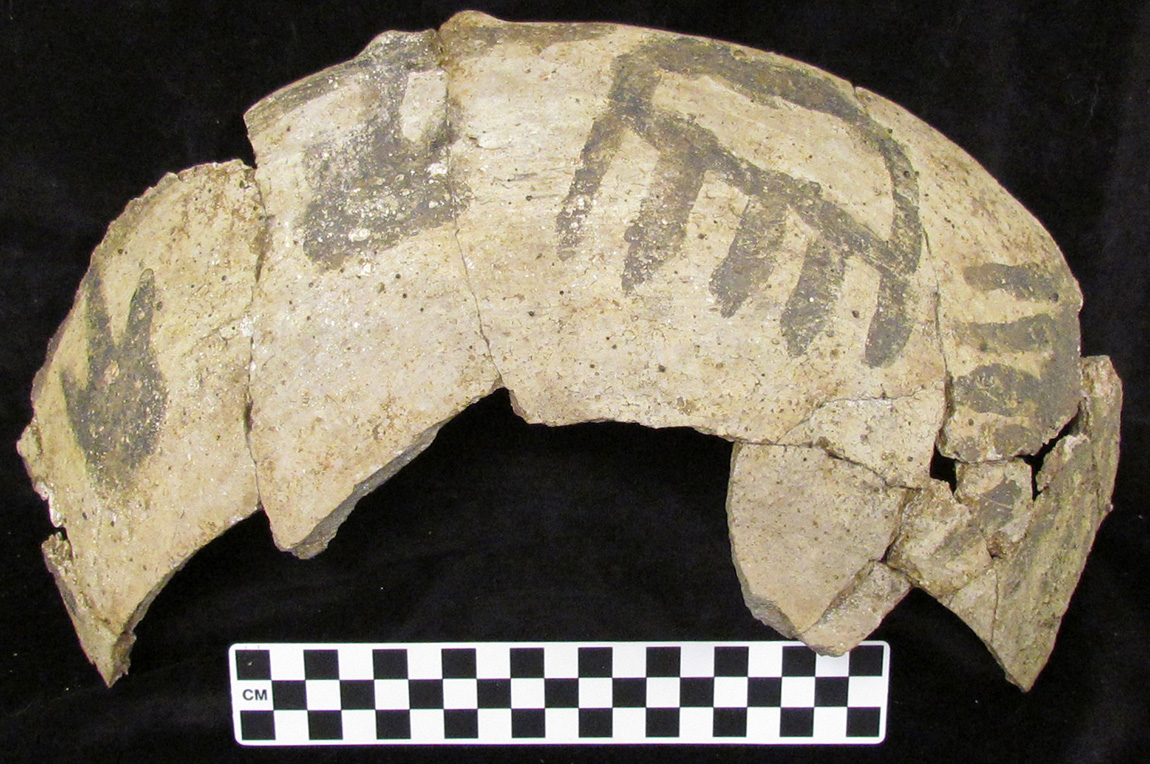
As a collective, the motifs on this pot may represent a narrative about death and the path of souls. When one dies, the soul or spirit travels around the horizon and waits for the constellation Orion, which is represented by a hand aligned with the Milky Way so that the soul/spirit can leap from this world to the next using the Milky Way as the pathway to the next world. Many Eastern Woodlands and Southeastern Native American cultures viewed the Milky Way not just as a cluster of stars, but as the actual path taken by free-souls journeying toward the realm of the dead. Lankford and other researchers connected specific motifs—such as the "hand-and-eye" symbol carved onto shell gorgets—to portals or entry points on the Path of Souls, linking the celestial map with funerary rituals conducted in the earthly realm.
For more information on George Lankford’s interpretations of pottery motifs:
George E. Lankford, F. Kent Reilly III, and James F. Garber, Eds, (2011) Visualizing the Sacred: Cosmic Visions, Regionalism, and the Art of the Mississippian World. University of Texas Press.
F. Kent Reilly III and James F. Garber, Eds. (2007) Ancient Objects and Sacred Realms: Interpretations of Mississippian Iconography. University of Texas Press.