Tim Mulvihill
Artifact of the Month - October 2026
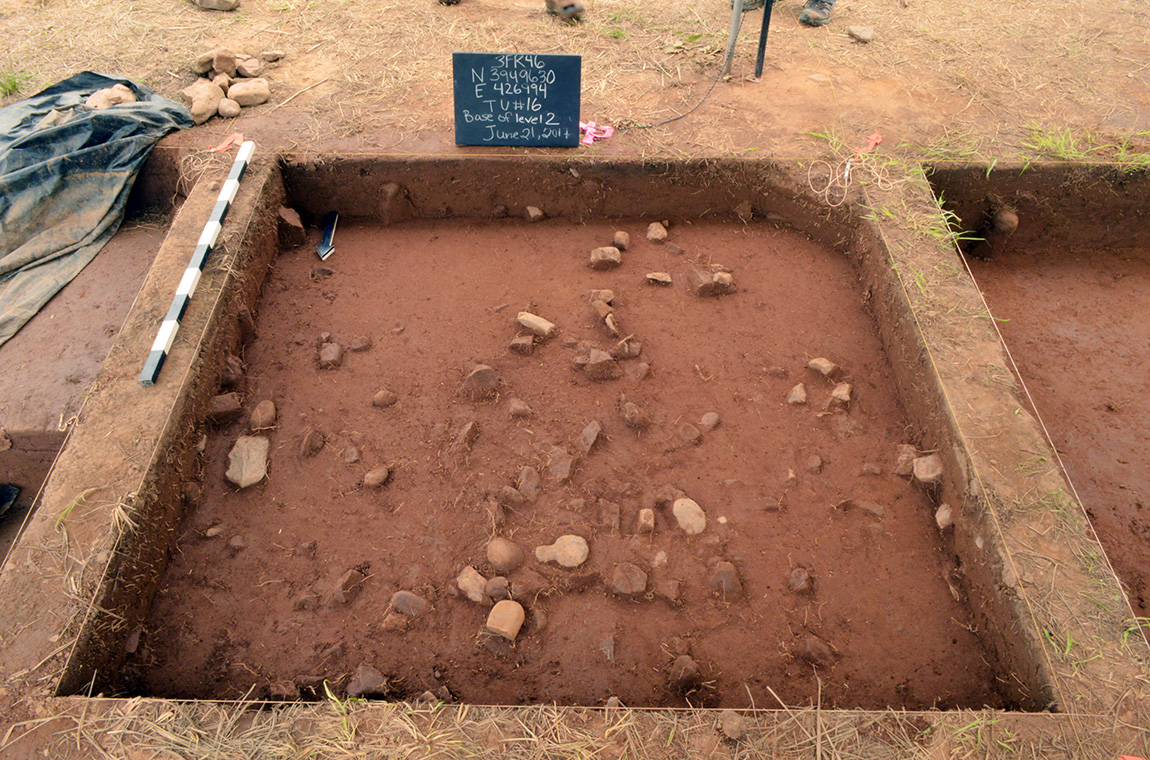
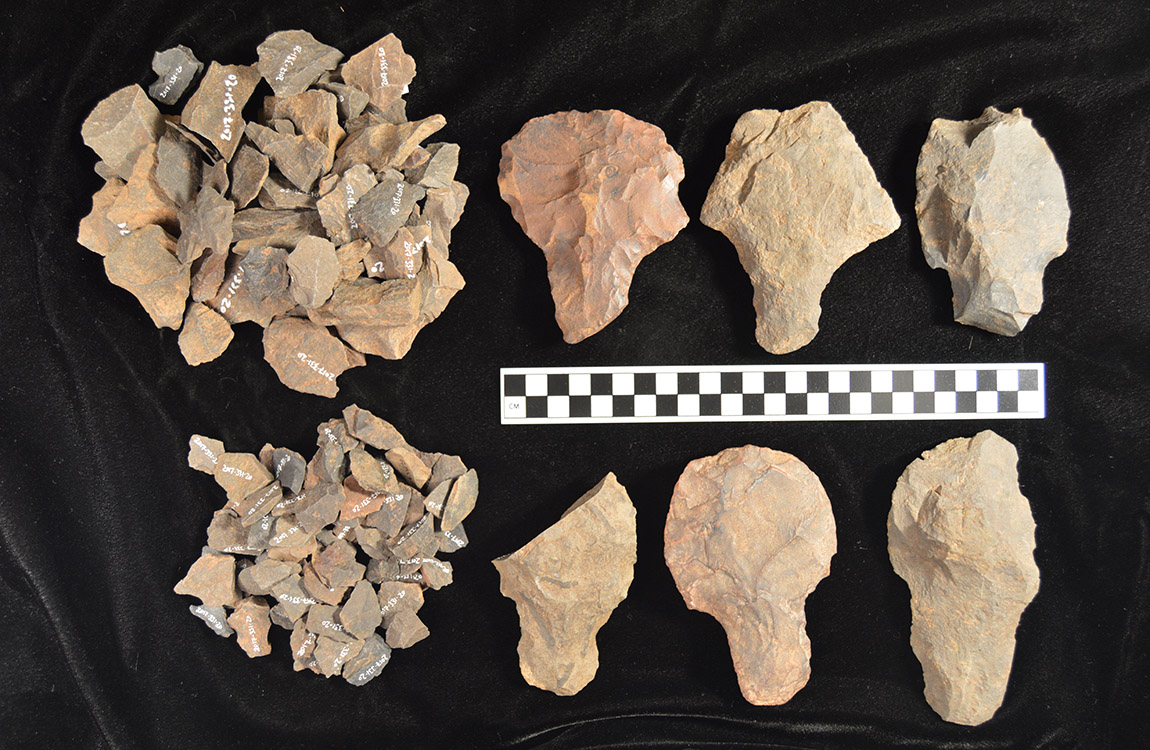
One type of tool that was found during the 2017 Arkansas Archeological Society/Arkansas Archeological Survey Training Program at site 3FR46 was the argillite or siltstone hoe, sometimes called a spade (Mulvihill et al. 2026). The specimens recovered from the site included 52 hoe or hoe fragments including 8 complete stemmed hoes and 44 hoe fragments including 17 stem fragments, 24 bit fragments and three fragments split longitudinally. Studies have shown that many of these tools were used to work the soil, either through some type of digging, or through agricultural or gardening activities (Jurney 1981:20-21; Bond 1977; Campbell 2014), although Campbell’s study of Fourche Maline tools to the south in Yell County, Arkansas, found that certain types of tools (in this case single-bitted forms) were used for wood cutting or woodworking.
These and similar tools occur over a wide area in western Arkansas and eastern Oklahoma and are made from various raw materials depending on what is available locally, including argillite, silicified siltstone, silicified sandstone, hematite/limonite, and ironstone, all of which have similar qualities. Some cherts have also been used to produce similar tools (Jurney 1981; Harden and Robinson 1975). Replication studies indicate it makes for a digging tool that is effective, sturdy, and needs minimal maintenance. By comparison, chert was selected to manufacture tools to perform tasks where sharp blade edges were required. Compared with argillite, chert is less resilient and brittle (Hilliard 2004:21; Bond 1977).
These tools likely had multiple purposes and only use-ware analysis can provide definite answers on how each tool was used. The excavations at 3FR46 also produced over 27,000 argillite flakes most of which were a byproduct of the manufacturing of these tools. The presence of two large storage pits (likely used for storage of agricultural products and later filled with trash) at the site along with the broken and used hoes also indicate they were using these tools in this part of the site.
Bond, Clell L.
1977a A Functional Analysis of Certain Gober Complex Artifacts. Unpublished master’s thesis, Department of Anthropology, University of Arkansas, Fayetteville.
Campbell, Rachel A.
2014 Double Bitted Axes of the Fourche Maline: Use-Wear Analysis and Experimental Replication. Theses and Dissertations. 2276. http://scholarworks.uark.edu/etd/2276.
Harden, P. and D. Robinson
1975 A Descriptive Report of the Vanderpool Site, CK-32, Cherokee County, Oklahoma. Oklahoma Anthropological Society Bulletin 23:91-168.
Jurney, David H.
1981 The Source and Distribution of Specialized Stone Tools in the Ozarks. Midcontinental Journal of Archaeology 6(1): 17–32.
Mulvihill, Timothy, Mary Brennan, Jared Pebworth, George Sabo III, Jami Lockhart
2026 Report on the 2017 AAS/ARAS Training Program Excavations at 3FR46. Report on file at the Arkansas Archeological Survey, Fayetteville.