Jared Pebworth
Artifact of the Month - November 2026

Kiln furniture is essential to firing large assemblages of pottery and includes a variety of clay forms utilized to support and stack vessels during the firing process. Historically, furniture forms were constructed in one of three ways: hand built, rolled out into slabs and wire cut into shape, or wheel thrown. The construction choice was determined by the application (Dick-Jacobsen 2009). Most kiln furniture was considered disposable and quickly made. The paste of kiln furniture was usually coarser than that of the stoneware vessels being produced. Kiln furniture was “tempered with coarse sand to prevent adherence to vessels during firing. (Walthall et. al 1991:14). The kiln furniture assemblage from the Boonsboro pottery site is extensive with at least 19 different types found at the Boonsboro pottery excavations in 2023 (Figure 1).
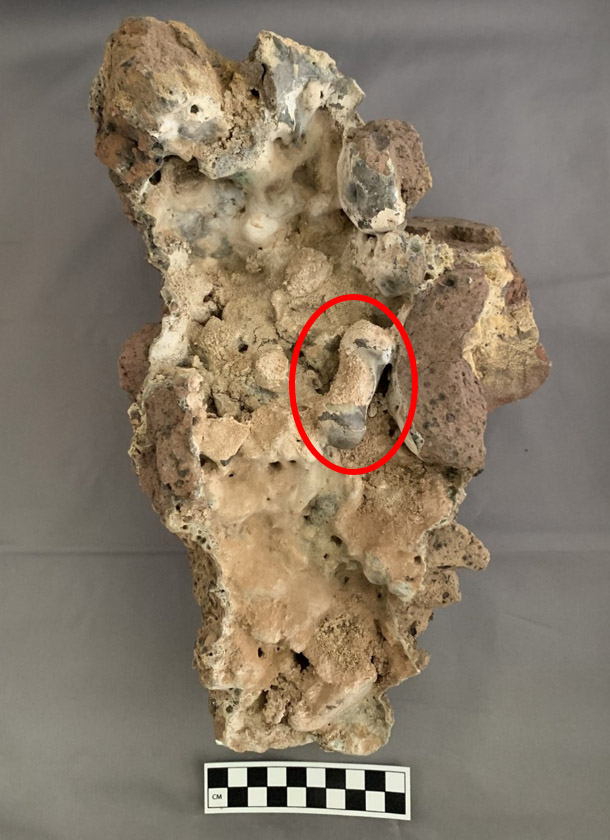
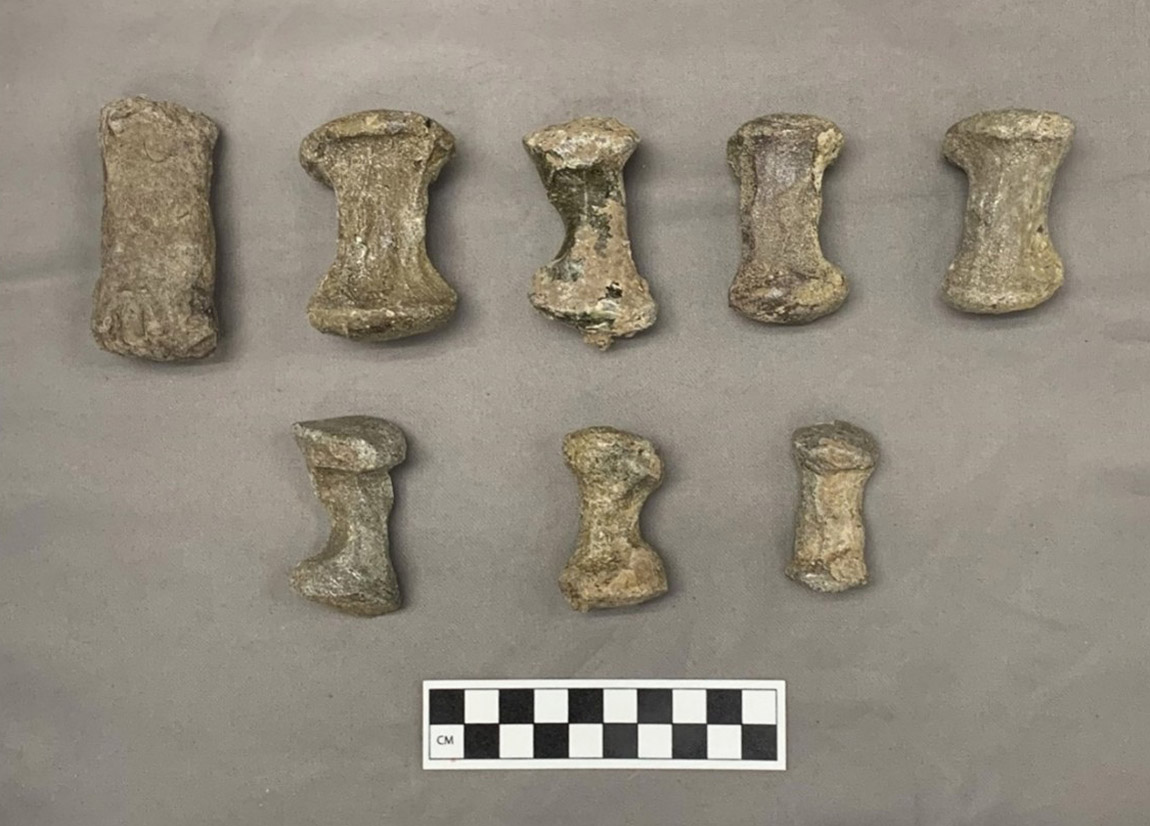
Leveling spacers are a type of hand-built, coil-formed kiln furniture commonly recovered from nineteenth-century pottery sites. These spacers were fashioned from a simple coil of gritty clay, which was subsequently modified by squeezing the malleable clay in between the thumb saddle and index and middle fingers, extruding the clay to form knob-like ends. The result consists of a constricted coil in the middle, with wider, flared ends, producing a shape that resembles a spool, dog bone or dumbbell. Numerous finger impressions preserved on these objects provide evidence of how they were shaped and manufactured (Figure 2). This form of kiln furniture functioned to stabilize, strengthen, and separate stacks of unfired pottery during kiln loading by providing multiple contact points (Dick-Jacobson 2009). Leveling spacers were also used in combination with other furniture types to steady the columns of pottery between each stack and against the interior kiln wall (Carnes- McNaughton 1995:77). Forms vary in size, reflecting the specific needs and applications dictated by the potter. Many examples exhibit heavy salt glazing, indicating possible reuse or the possibility of examples being left behind on the kiln floor or adhered to the walls and ceiling of the firing chamber. Although it is common knowledge that most kiln furniture is used for only one firing, its gritty sandy composition allows these forms to break away from vessels and other furniture after a firing. However, if the furniture is contaminated with salt glaze deposits from a previous firing, it can fuse to the objects that they encounter during the firing (Dick-Jacobson 2009) (Figure 3).
At the Boonsboro pottery site, 98 of these leveling spacers were recovered during excavation. Of these, 73 were in the “Waster Area”, indicating that they had been used and then discarded. Eleven leveling spacers were found within Kilns 1 and 2, suggesting that they were reused or fused to the wall and were unable to be removed (see Figure 3). Another 14 were found in the “Shop” area. This is likely a location where finished pottery was cleaned up after being fired and any kiln furniture that had stuck to a vessel during firing was removed and discarded. The study of kiln furniture types unique to individual pottery factories or potters may provide insights into on how pottery was organized and stacked within various types of kilns. The residual diagnostic marks left on the pottery vessels during firing may assist in identifying the potteries from which the vessels originated. These clues are especially important when identifying unmarked vessels, often encountered on nineteenth-century, rural pottery, and the broken sherds recovered from archaeological sites. These functional visual attributes left on the pottery vessels by the various types of kiln hardware utilized can contribute to a better understanding of pottery distributions, site chronology, and the identification of early regional ceramic industries.