Towards Achieving Curation Literacy Curation Based Field School
Steven Munoz, Marcelo Feliz, Aves Hartman, Amber Webb, Stephanie McMorrow, Michelle Rathgaber, Sarah Shepard
Artifact of the Month - July 2026
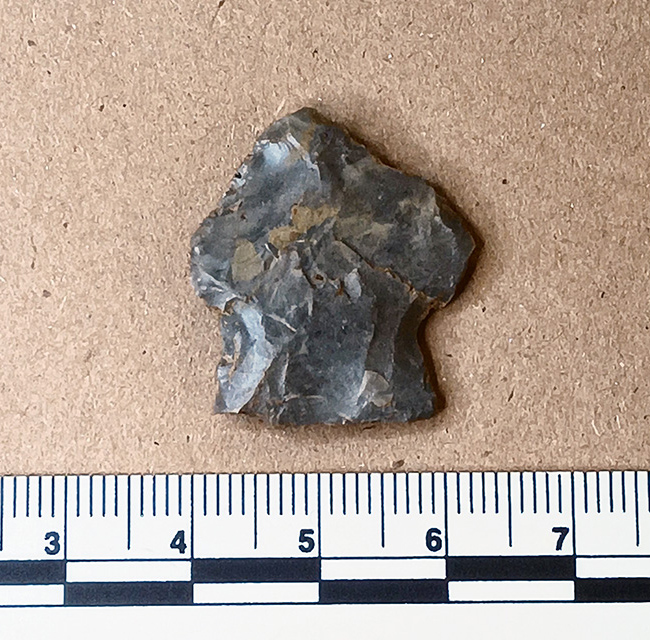
The 2026 TACL field school undertook the project of re-curating, digitally cataloging, and analyzing portions of an archeological survey project that was undertaken in 1991 by a private cultural resource management firm. The project consisted of shovel testing along a project corridor in north central and northeast Arkansas. While cataloging the artifacts, we came across this highly resharpened point from Lawrence County.
We often want to be able to name points when we see them in our collections, but often what started as one identifiable type has been changed many times over its life through resharpening, breaking and being repurposed, or use. This point has been resharpened extensively through its life as can be seen by the short height of the point in relation to its base (Figure 1).
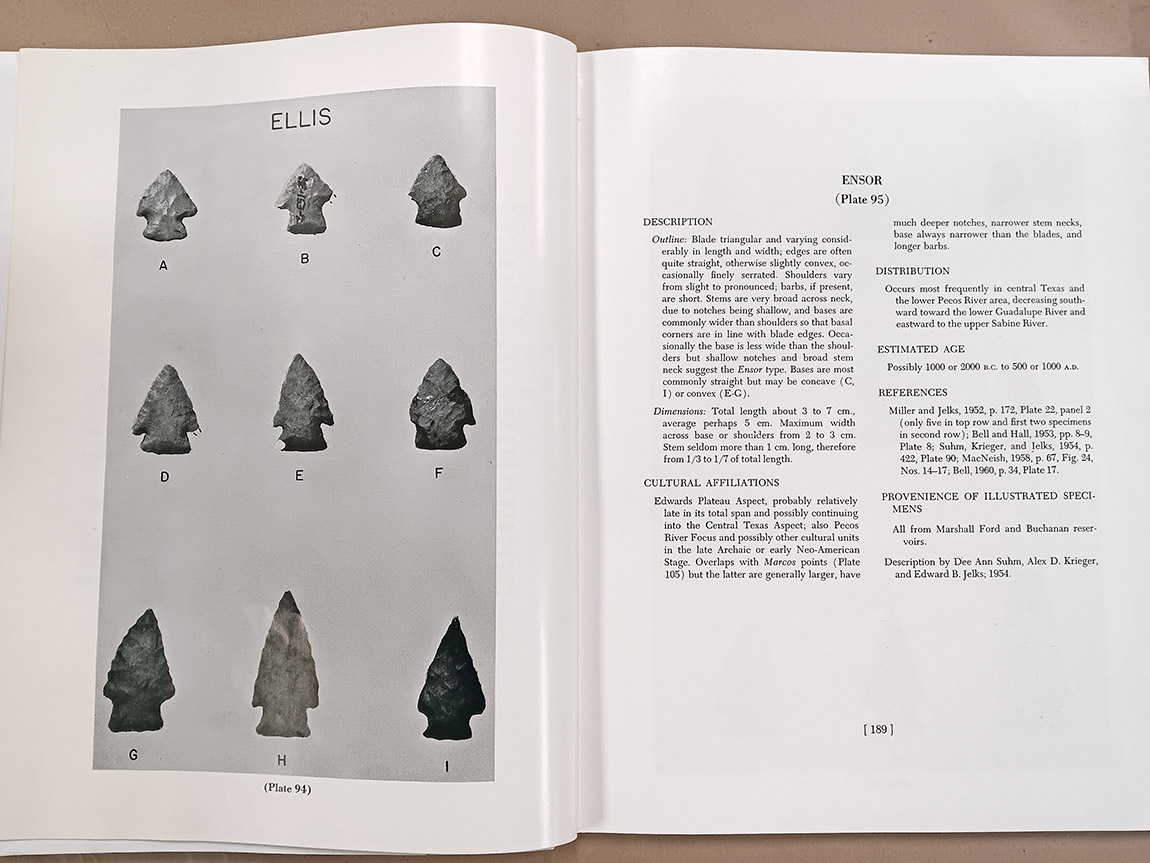
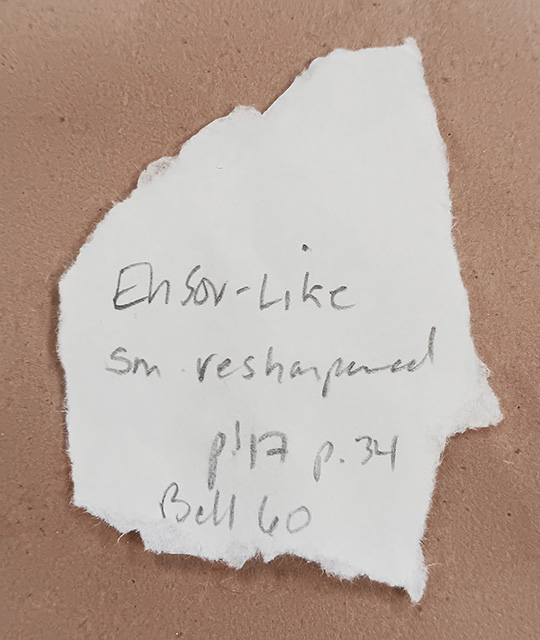
In the case of this point, the original archeologists labeled it as being “Ensor-like”, noting that the identification came from Bell (1960) (Figure 2). Reexamining the point, we think that it has a flatter base than the described Ensor point and is more likely to be related to an Ellis point. Both point types were produced throughout the Archaic period, although Ellis points are more likely to be identified in Arkansas, historically. Further confusion of the type could have been caused by reference to Suhm and Jelks (1962), in which the plate of Ellis type points is opposite the description for Ensor points (Figure 3). Due to the point being highly resharpened, assigning a type becomes increasingly difficult. Has the base been reworked as well, or was it secured in its haft and never touched? How long was the body of the point when it started? There are other, longer points with similar square bases. Ultimately, it doesn’t change the interpretation of the time period of the point as both Ensor and Ellis point types were produced during the Archaic period. This case forces us to rethink the classification of archeological points compared to how people created, used, and modified these points through their use-lives.
References:
1960. Bell, Robert E. Guide to the identification of certain American Indian Projectile Points. Oklahoma Anthropological Society. Special Bulletin No. 2.
1962. Suhm, Dee Ann and Edward B. Jelks (eds.) Handbook of Texas Archeology: Type Descriptions. The Texas Archeological Society and The Texas Memorial Museum, Austin, TX.