Mary Beth Trubitt (Arkansas Archeological Survey, HSU Research Station)
April 2, 2026
One result of the collaborative Arkansas Archeological Survey – Arkansas Archeological Society – Ouachita National Forest project in Montgomery County is the definition of a new archeological phase for the Ouachita Mountains region in Arkansas ca. AD 1500–1650. I thank Alaina Tahlate, language preservationist for the Caddo Nation of Oklahoma, for her suggestion of Hadashk’ah kantan as the phase name. Hadashk’ah (meaning tough or unyielding) and kantan (times) refers not only to the difficulties the ancestral Caddo people were going through, but also their resilience as their families and communities persisted in this region through hard times.
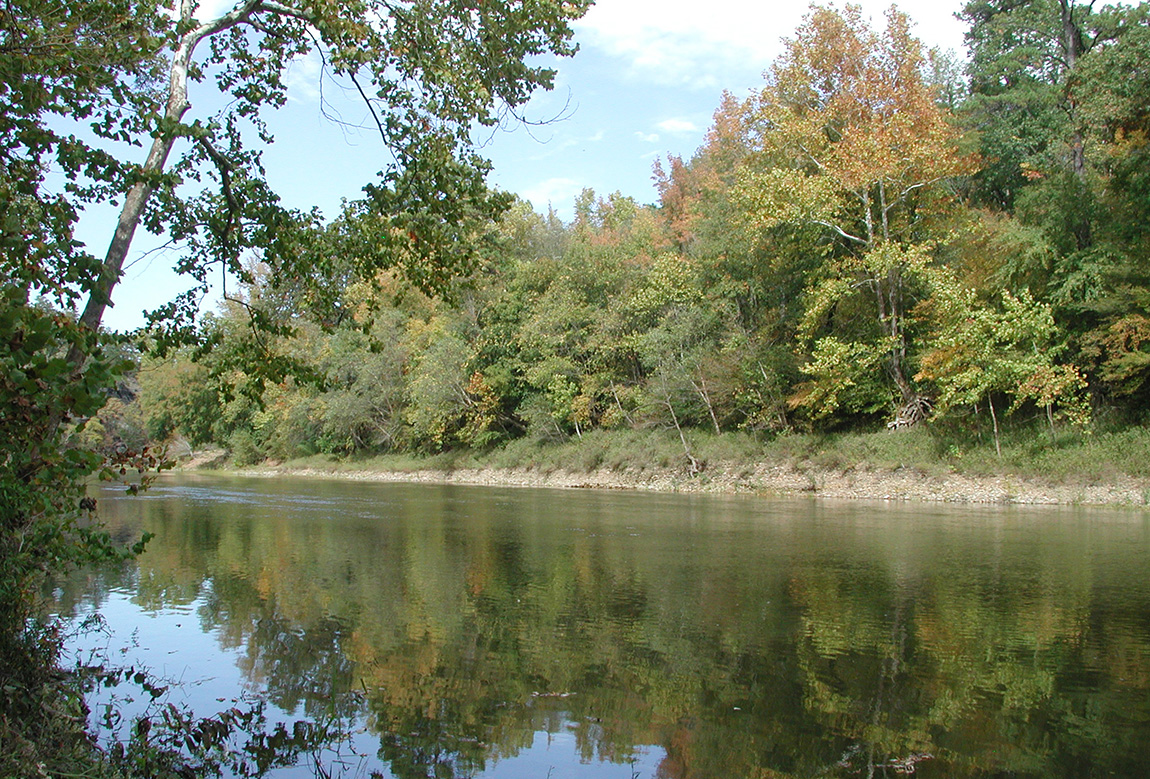
Excavations at 3MN298 revealed a location near the upper Ouachita River where Indigenous people lived from at least the Late Archaic through Late Caddo periods. Differences in artifact styles between the Middle Caddo period Buckville phase (AD 1350–1500) cultural features, including a large circular pattern of postholes (Hanvey 2014), and the Late Caddo period features forms the basis for the new phase. Radiocarbon dating of two large pits filled with household refuse bracket the Late Caddo period use of the site to AD 1500–1650 (Trubitt and Leslie 2016).
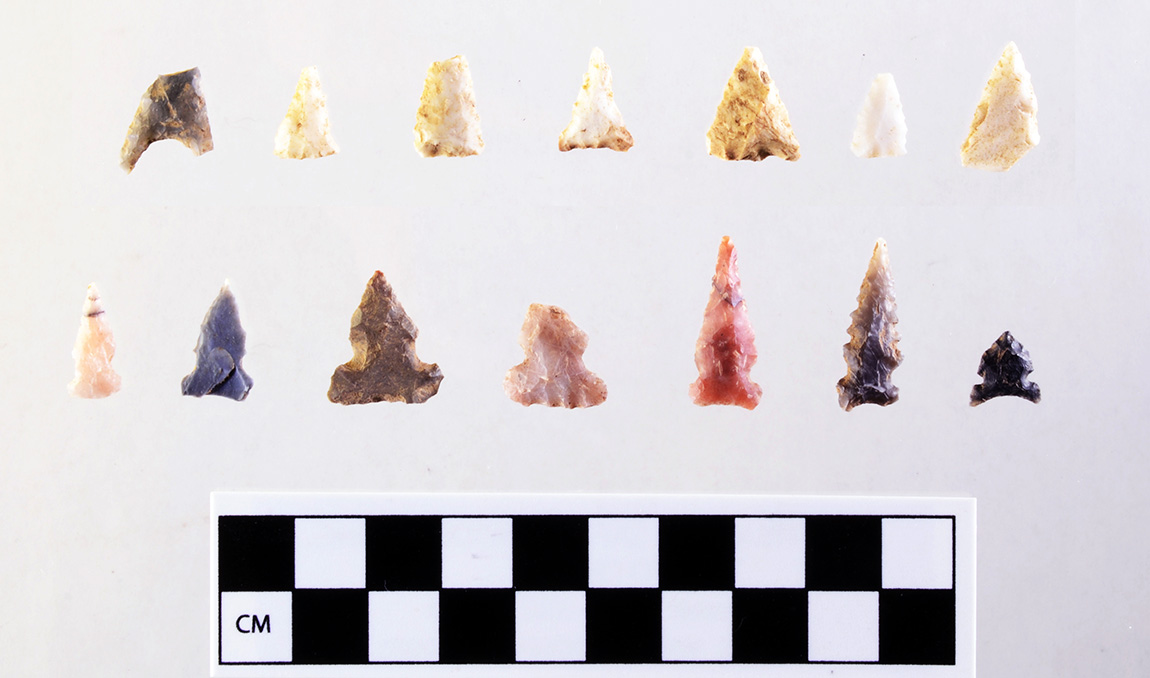
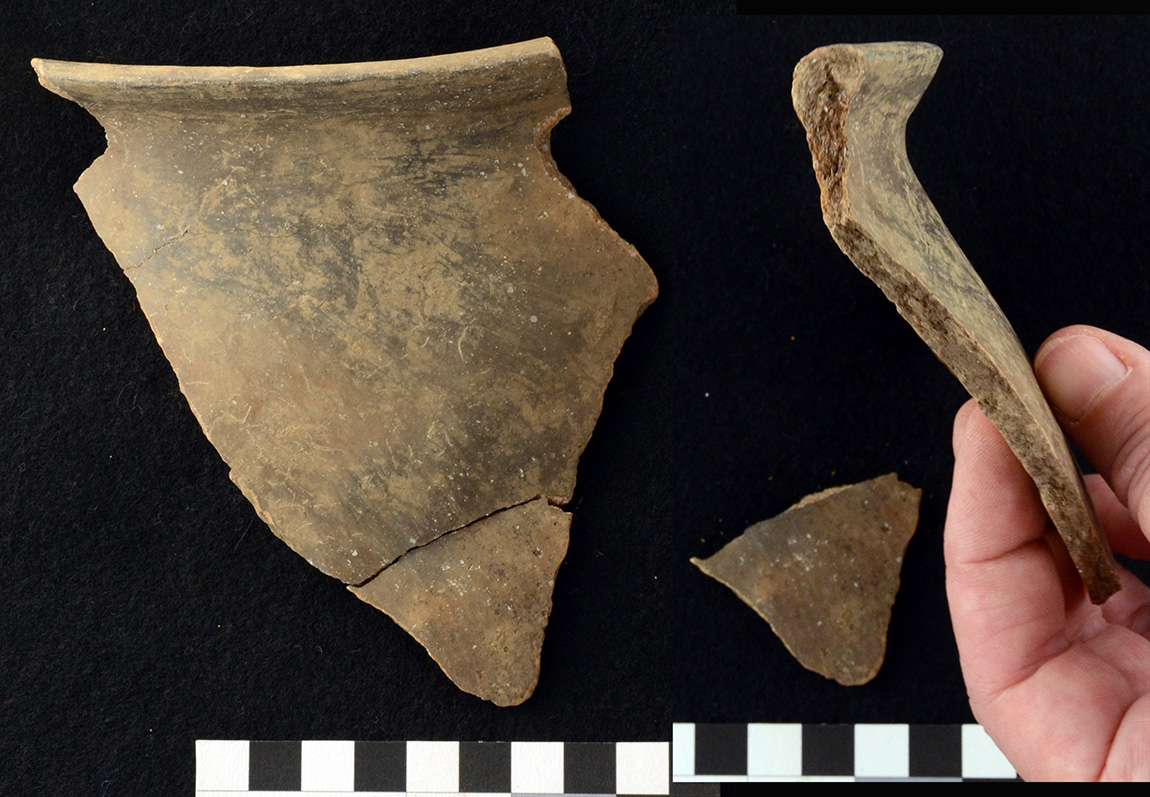
Key artifacts diagnostic of the Hadashk’ah kantan phase include Woodward Plain, Braden Incised, and Foster Trailed-Incised jars, often tempered with shell, Woodward Plain, Poteau Plain, and Hudson or Hodges Engraved bowls, Keno Trailed and Ashdown Engraved bottles, and Fresno, Washita, and Maud arrow points made from novaculite. Ancestral Caddo farmers cultivated crops in the Ouachita Mountains that included at least maize, squash, and beans. They collected and processed hickory nuts, black walnuts, hazelnuts, and acorns for food, as well as several wild fruits (maypop, strawberry, hawthorn, grape, persimmon) and grains (chenopodium, smartweed or knotweed, marsh elder or sumpweed, and sunflower), some of which may have been cultivated. Deer, turkey, fish, turtles, and freshwater mussels were eaten as protein (and used as raw materials). Cane was used for building construction and for tools and basketry. The Late Caddo period post pattern designated Structure 2 in Area I at 3MN298 appears to be part of a rectangular building, but whether there was a shift from circular to rectangular houses during the Hadashk’ah kantan phase is unclear.
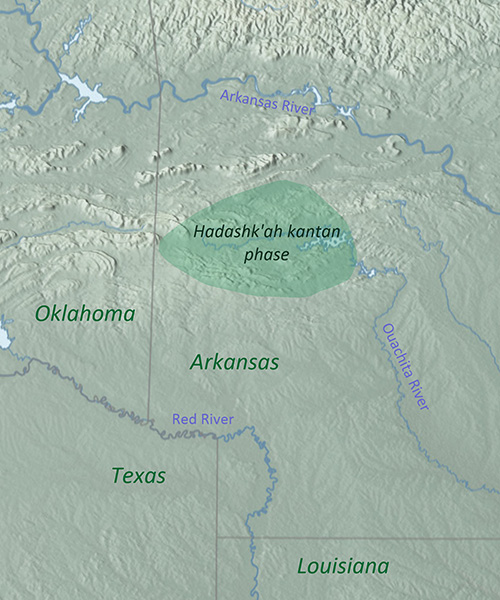
Besides the cultural features identified at Areas I and VII at the Dragover site (3MN298), we can identify Buckville and Hadashk’ah kantan phase components at the Adair mound center (3GA1; Trubitt 2023), and the Standridge site (3MN53; Early 1988), while the Caddo Hills site (3MN22; Cinotto 2019) and the Winding Stair site (3MN496; Early, ed., 2000) show primary use during the Hadashk’ah kantan phase. My recent site files search of archeological sites in Garland, Montgomery, and Polk counties identified numerous sites with suspected Late Caddo period Hadashk’ah kantan phase components, giving us a sense of its geographic extent.
What spurred the changes in artifact styles seen between the Buckville and Hadashk’ah kantan phases? One factor may have been an extended period of extreme drought for this area between AD 1450 and 1458. Such a long span of drought years may have meant crop failures, stressing the farming communities. Ancestral Caddos would have made cultural changes to adjust to these conditions. The 1540s were difficult times as well, as the Spanish expedition led by Hernando de Soto impacted Native communities across Arkansas. While disruption and population movements characterized much of the Southeast following initial encounters with the Spanish, we see continuity and persistence of ancestral Caddo people—at least until the mid-1600s—in the Ouachita Mountains region. At that time, some households may have moved north to the Arkansas River valley or moved south to join relatives living in the middle Ouachita River valley or Red River valley.