by John H. House, Pine Bluff, Arkansas
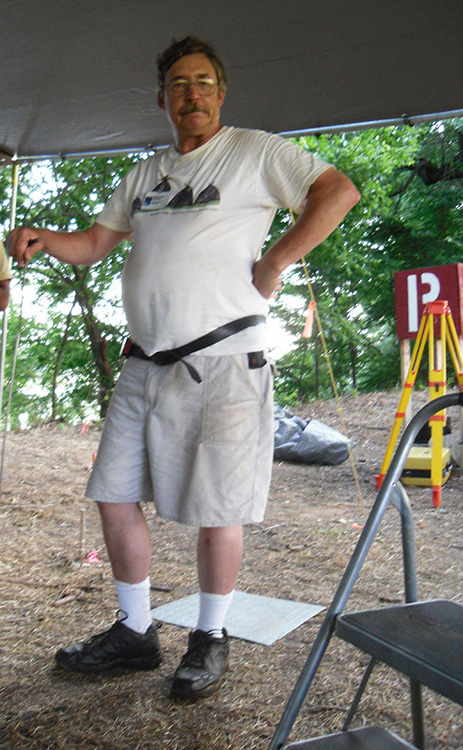
A man standing under a sunshade canopy
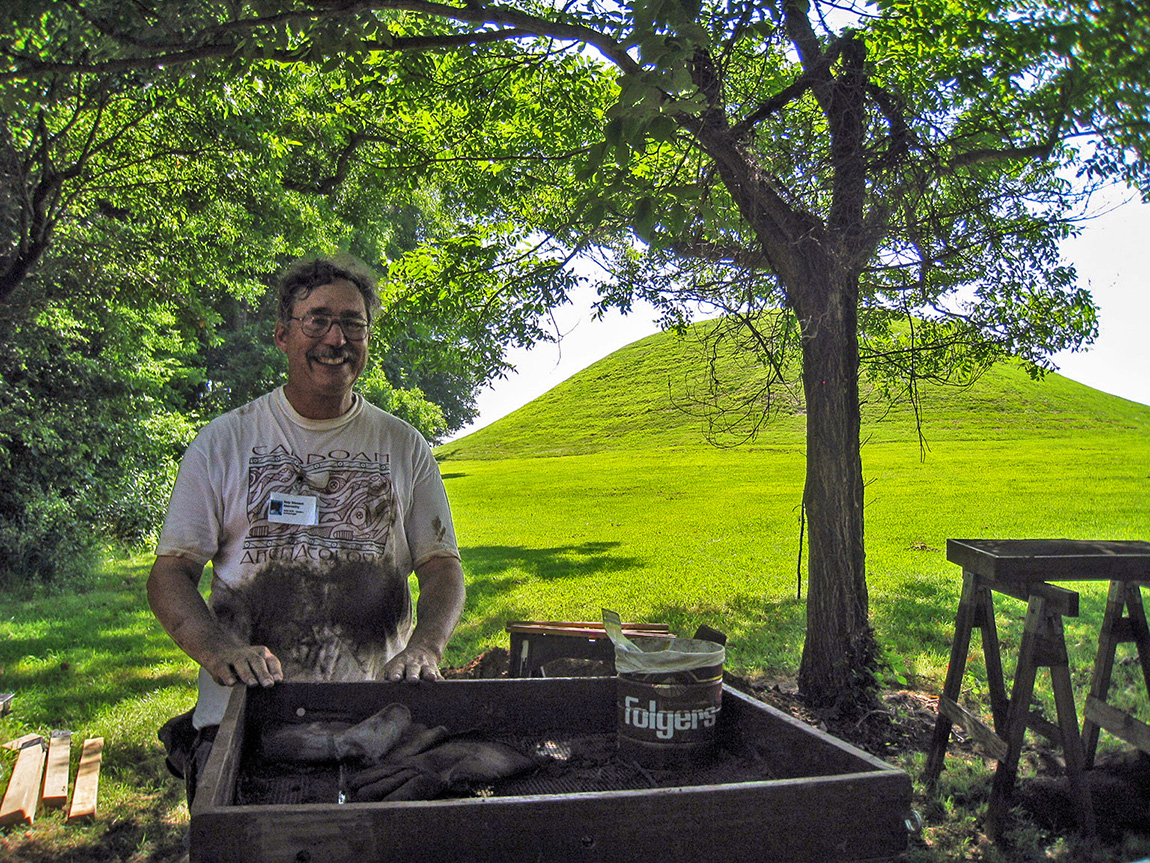
Skip at the 2010 Training Program at Plum Bayou Mounds Archeological State Park.
The Arkansas Archeological Survey and archeology community remember our dear friend and colleague, Leslie "Skip" C. Stewart-Abernathy, 77,  who died Tuesday, March 3, 2026, at Dardanelle Regional Medical Center. Skip was born May 11, 1948, in Memphis, Tenn., to Leslie Clive Abernathy, Jr. and Marguerite (Orr) Abernathy, but spent most of his growing years in Jonesboro. He married Judith Carol Stewart-Abernathy, on January 5, 1980, in Ozark, Arkansas. He was preceded by his parents. He is survived by his wife of 46 years, Judith; two sons, Benjamin Guice Stewart-Abernathy (Charity) of Russellville, and Michael Leslie Stewart-Abernathy (Angel) of Fort Smith; a daughter, Elizabeth Gilbert (Troy) of Fort Smith; five grandchildren, and one great grandchild.
In 1977, as he was completing his PhD degree at Brown University, Skip became Research Station Archeologist at University of Arkansas at Pine Bluff and the first professionally trained historical archeologist to be hired by the Arkansas Archeological Survey. Skip and Judith moved to Russellville in 1989, where he took over the Survey Research Station at Arkansas Tech university for 18 years. In 2007, the Station moved to the Winthrop Rockefeller Institute campus atop Petit Jean Mountain.
Over the course of his Arkansas career, Skip participated in archeological projects all over Arkansas, including yearly Arkansas Archeological Survey/Society Training Programs. Skip was a tireless champion for historical archeology; his wit, humor, and enthusiasm helped galvanize colleagues and volunteers to support projects across the state. Notable projects include Historic Washington State Park and Old Davidsonville, the Moser farmstead in Northwest Arkansas, and salvage excavations at the Ashley Mansion in downtown Little Rock and the West Memphis boat wrecks site on the Mississippi River. In the course of the 1997 and 1998 training sessions in the Menard locality on the lower Arkansas River, Skip directed excavations of early contact era Native American graves at the Lake Dumond site. In 2003, he helped direct excavations at the Wallace Bottom site, the location of late 1600s Quapaw village of Osotouy and the early to mid-1700s French Arkansas Post. The latter project was sponsored by the Quapaw Nation of Oklahoma under a National Park Service Tribal Historic Preservation grant.
""
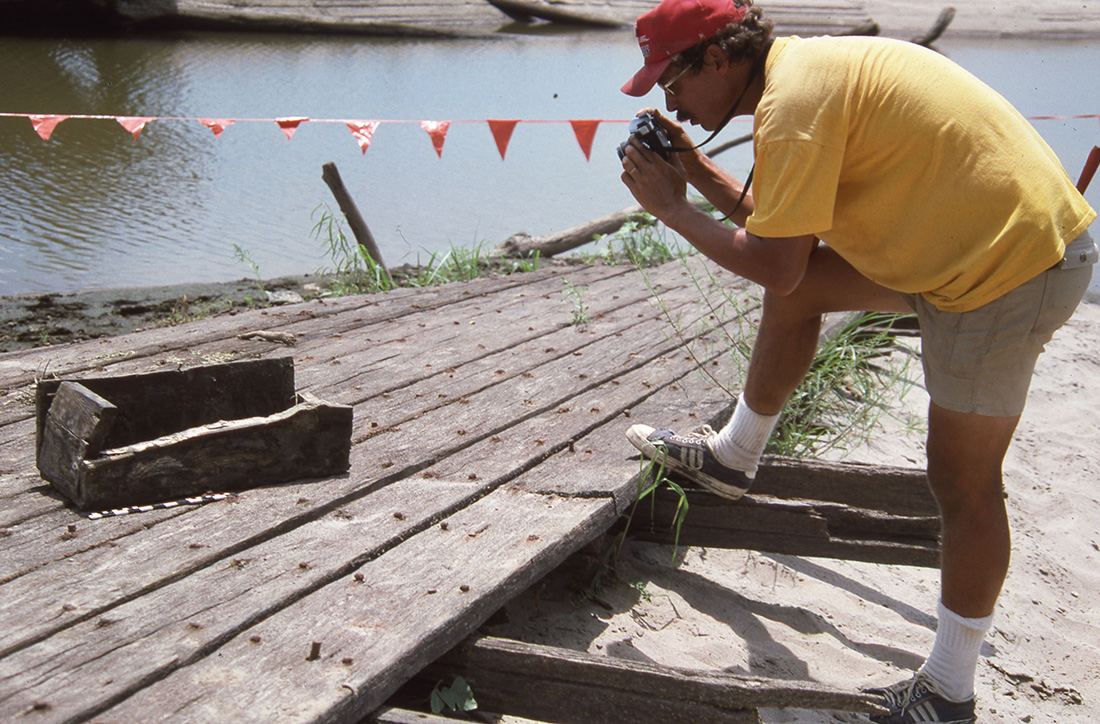
Skip documents one of the historic boat wrecks exposed by record low water on the Mississippi River in the summer of 1988, West Memphis.
""
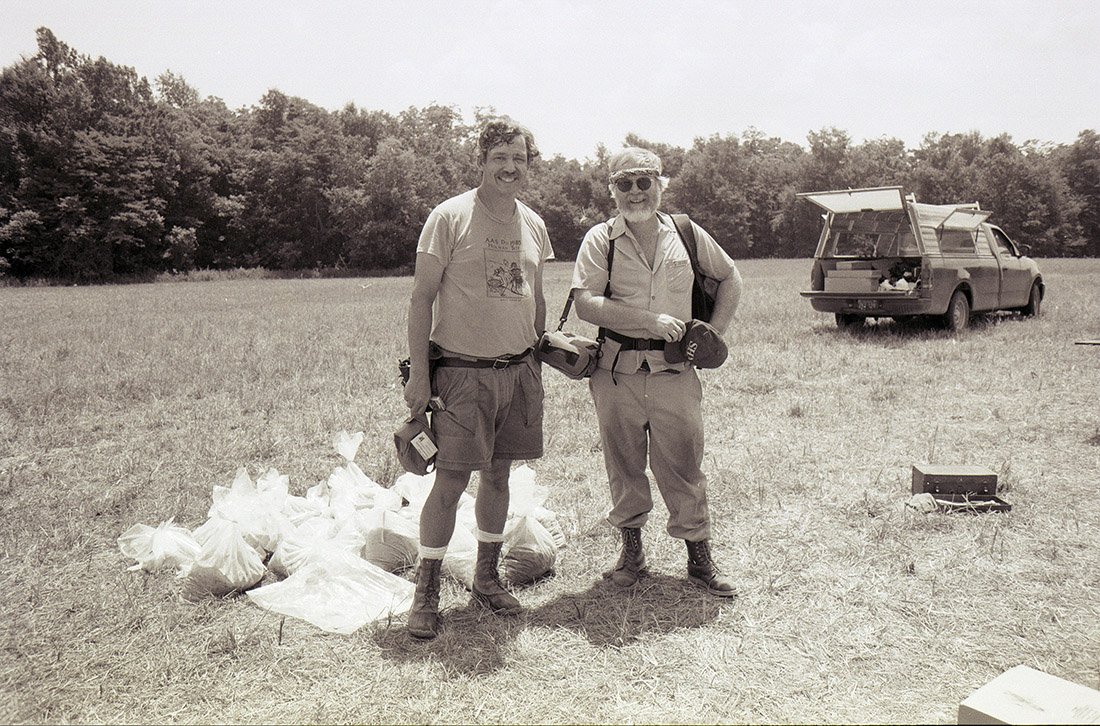
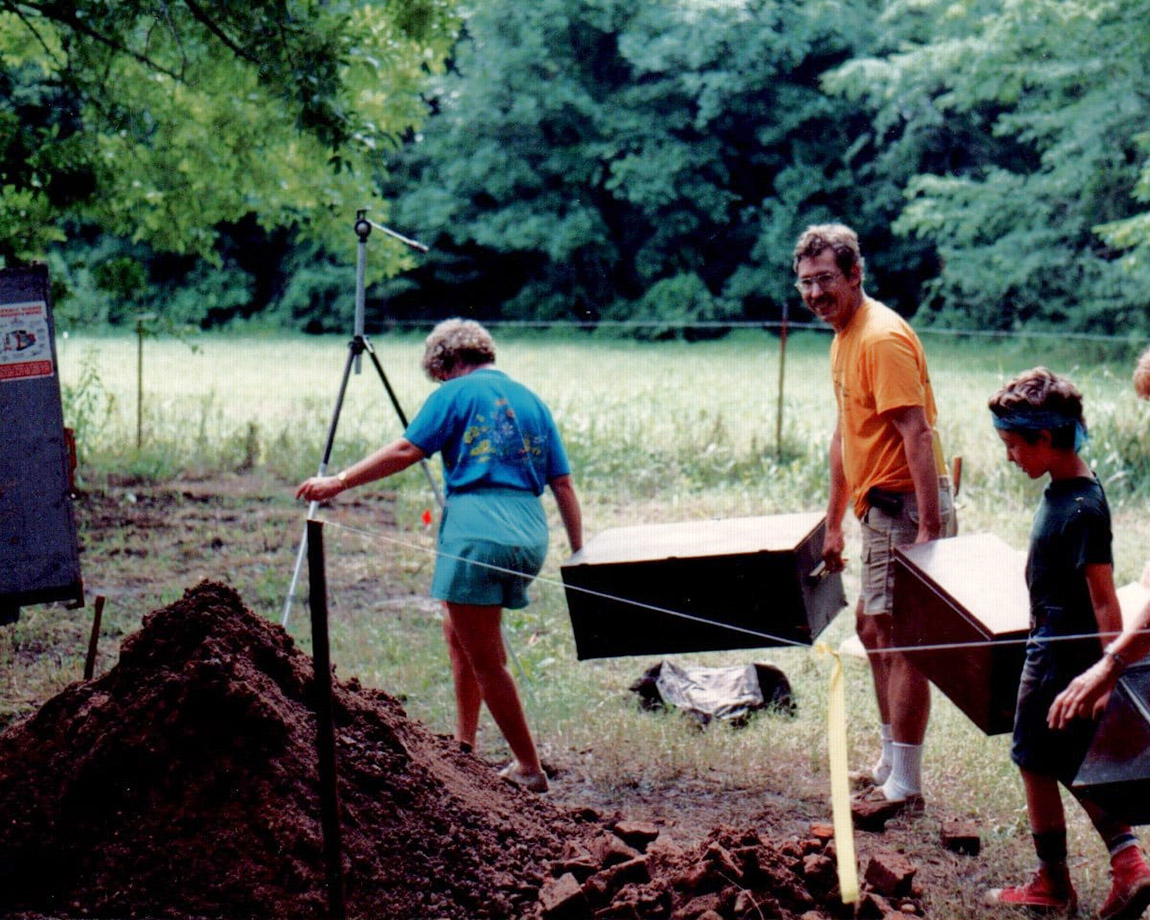
Skip and Virgil Noble, U.S. National Park Service Archeologist, Midwest Archaeological Center at the Lake Dumond site, June 1997.
Skip’s achievements earned him the Arkansas Historical Association’s Lifetime Achievement Award (2011), the National Endowment for the Humanities Chairman’s Commendation (2012), and the Arkansas Archeological Society’s McGimsey Preservation Award (2012). Skip retired in 2015, following 38 years of service to the archeology and history of the Natural State. He is warmly remembered by his Arkansas Archeological Survey colleagues and by countless volunteer participants in Arkansas Archeological Society and Survey training digs, many of whom became his lifelong friends.
""
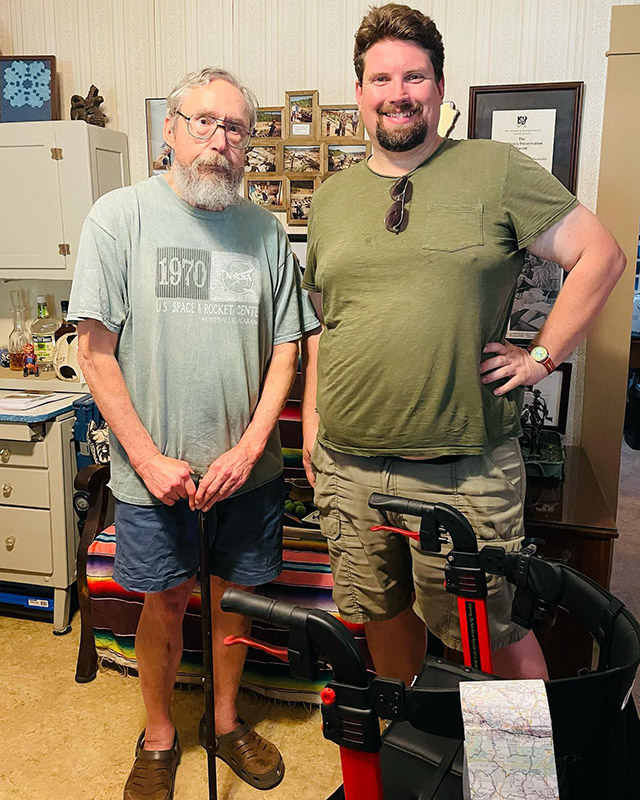
Skip and Matthew Rooney at Skip’s house, September 20, 2022. Photo courtesy of Matthew Rooney.
""
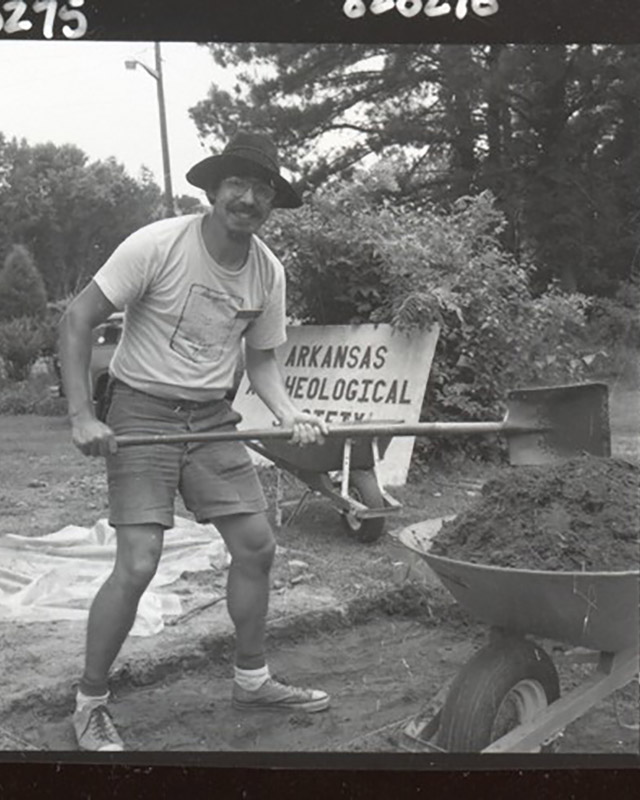
Skip at Historic Washington State Park, 1982.
Skip will be remembered at the evening reception at the Arkansas Archeological Society’s conference this September in Fort Smith. If you have any photographs or remembrances you would like to share on a loop PowerPoint presentation at the event, you may contact Carl Drexler at cdrexler@uark.edu
Memorial donations in Skip’s name may be made to Habitat for Humanity Pope County, PO Box 1863, Russellville AR 72811-1963.
""
Skip screening at the 2010 Training Program at Plum Bayou Mounds Archeological State Park.
Survey Publications:
1980. Seat of Justice, 1815-1830: An Archeological Reconnaissance of Davidsonville. Arkansas Archeological Survey Research Report No. 21.
1982. The Other Four and a Half Centuries: Historical Archaeology and the Arkansas Archeological Survey. In Arkansas Archeology in Review, edited by Neal L. Trubowitz and Marvin D. Jeter.
1986. The Moser Farmstead: Independent But Not Isolated: The Archeology of a Late Nineteenth Century Ozark Farmstead. Arkansas Archeological Survey Research Series No. 26.
2002. Ghost Boats on the Mississippi: Discovering Our Working Past. Arkansas Archeological Survey Popular Series No. 4.
2020. Wooden Boats and Curving Blue Lines. Arkansas Archeological Survey Popular Series No. 7.
Other Publications:
1978. Lumps of Earth... Pieces of Wood and Iron... Plates of Food. Field Notes: Newsletter of the Arkansas Archeological Society (157):7–8.
1986. Urban Farmsteads: Household Responsibilities in the City. Historical Archaeology 20(2):5–15.
1998. Some Archeological Perspectives on the Arkansas Cherokee. The Arkansas Archeologist: Bulletin of the Arkansas Archeological Society 37:39–54.
1999. From Famous Fort to Forgotten Farmsteads: Historical Archaeology in the Mid-South. In Arkansas Archaeology: Essays in Honor of Dan and Phyllis Morse, edited by Robert C. Mainfort and Marvin D. Jeter, pp. 225–244. University of Arkansas Press, Fayetteville
""
Skip at the 1991 Training Program at Taylor House 3DR26. Photo courtesy of Jama Best.