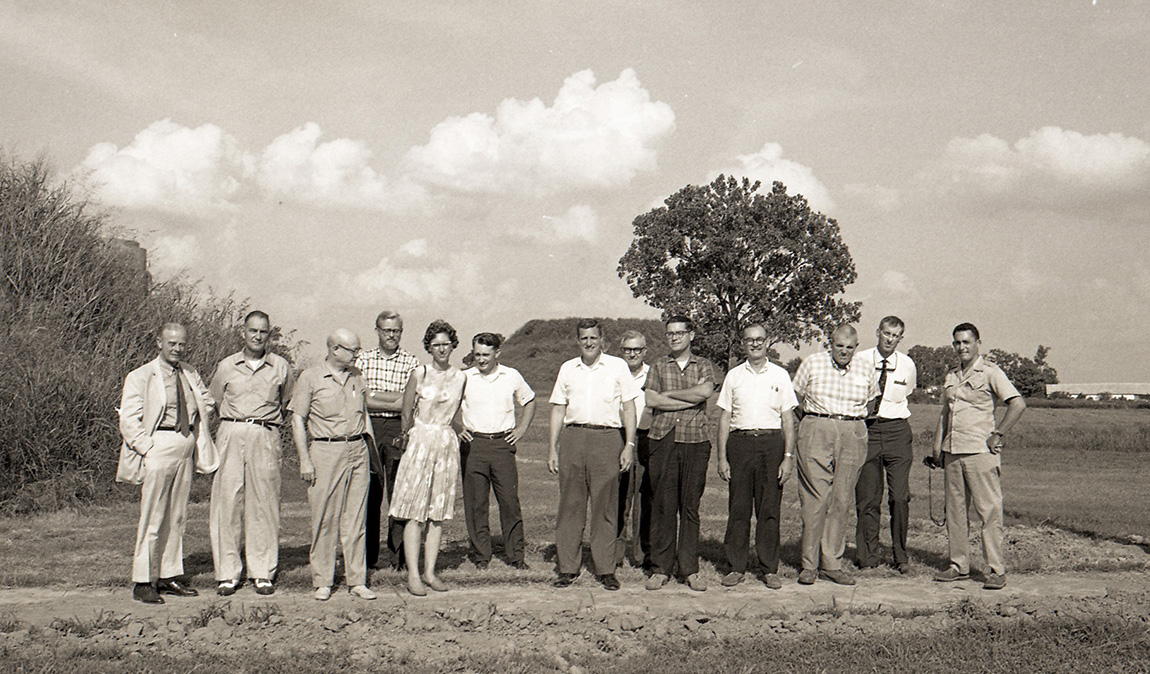
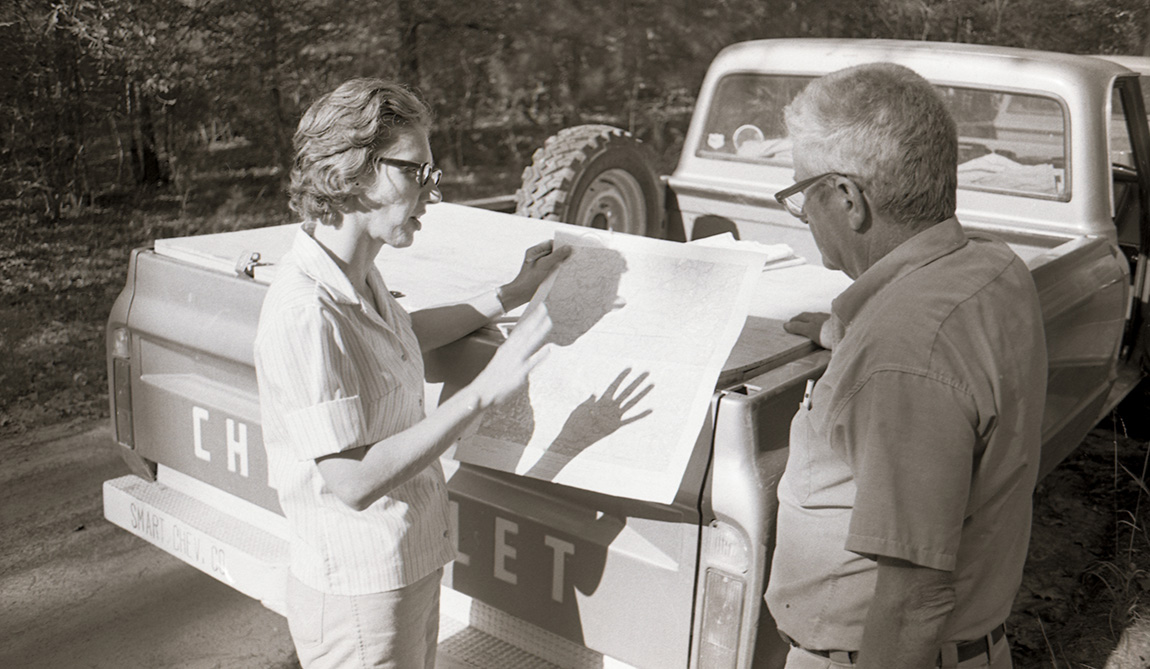
With contributions from Michelle Rathgaber, George Sabo III, Mary Beth Trubitt, Deb Sabo, Beverly Watkins, and Jan Campbell.
Dr. Martha Rolingson passed away on December 14, 2025 at the age of 90. Martha was highly respected in Arkansas as the founding and longest-serving Research Station Archeologist at the Survey’s Plum Bayou Mounds Archeological State Park Research Station (26 years!!), but also as an esteemed colleague and friend. Martha was first hired by the Arkansas Archeological Survey in 1968 after completing her PhD at the University of Michigan about hunter-gatherer cultures of the Middle Green River Region of Kentucky. She served as the Research Station Archeologist at the University of Arkansas-Monticello Station from 1968–1972 and then worked at the Coordinating Office in Fayetteville for several years, during which she developed a program of research, interpretation, and exhibit display to help convince the State of Arkansas to purchase what is now Plum Bayou Mounds and preserve the site as a state park. She then served as the Research Station Archeologist at Toltec Mounds Archeological State Park (now Plum Bayou Mounds Archeological State Park) from 1979–2005. During her tenure at the Plum Bayou Mounds Research Station, she conducted excavations across the site, resulting in 8 books, 3 of which were produced by the Survey’s publication program, as well as 54 journal articles, and innumerable smaller papers and presentations. She also served on committees for MA and PhD students from the University of Arkansas, supervised projects that resulted in many more publications about the Plum Bayou culture and the Plum Bayou Mounds site itself, was a peer reviewer for (among others) the National Science Foundation and the National Endowment for the Humanities, served on the boards of the Society of Professional Archaeologists and the American Society for Conservation Archaeology, and was on at least one planning committee for the Southeastern Archaeological Conference.
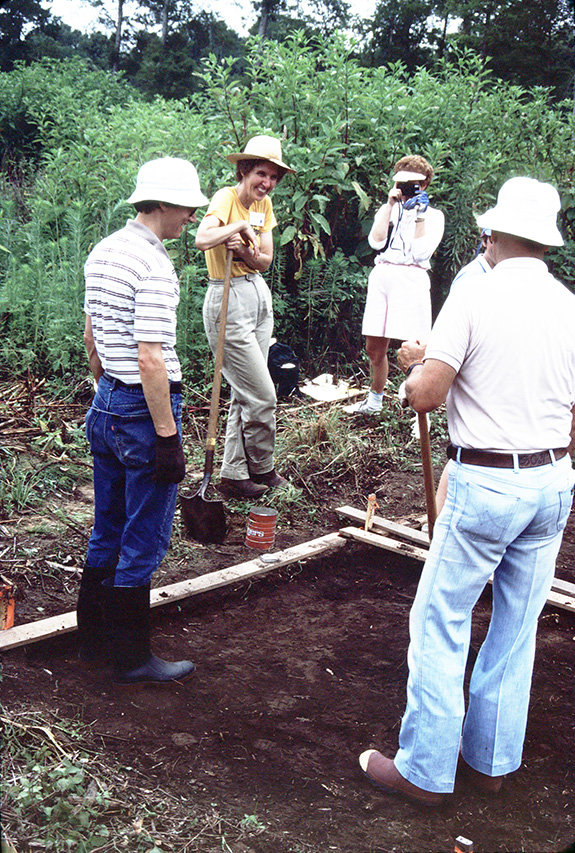
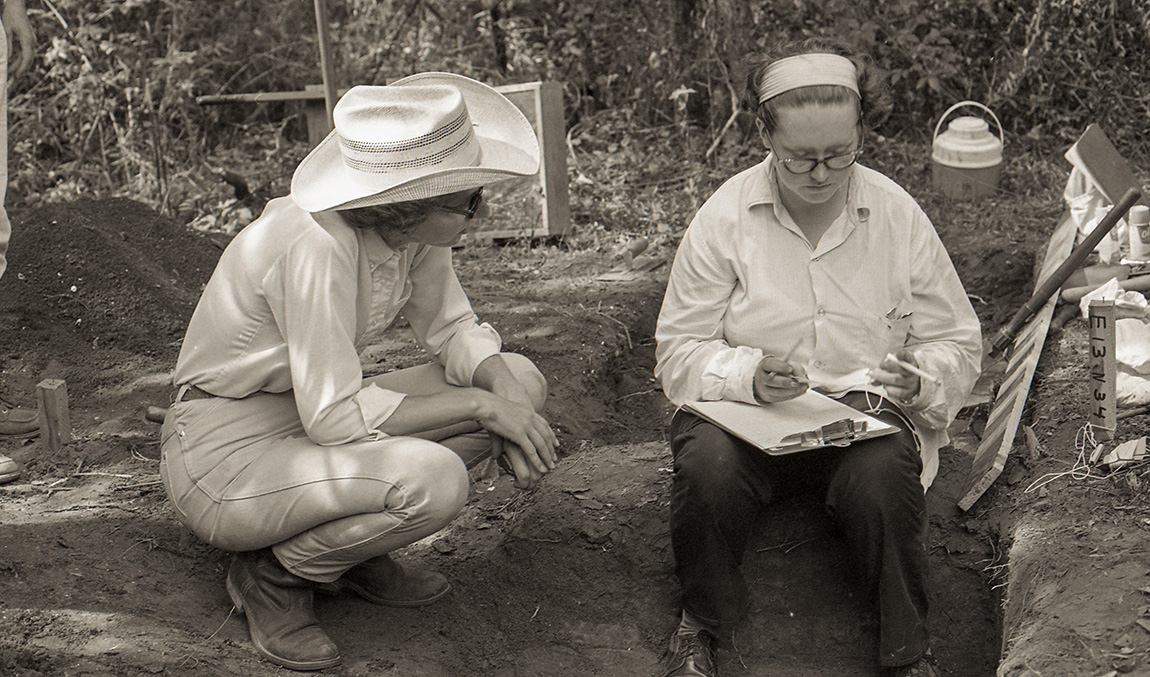
Martha hosted the Arkansas Archeological Society Training Program in Archeology at the Plum Bayou Mounds site in 1978, 1979, 1988, 1989, and 1990. This program is a huge undertaking that produces enough data for years of analysis. Taking it on for multiple years and multiple projects allowed hundreds of Society volunteers to learn scientific excavation, laboratory and curation methods as well as created much of the data needed to write the books that she published.
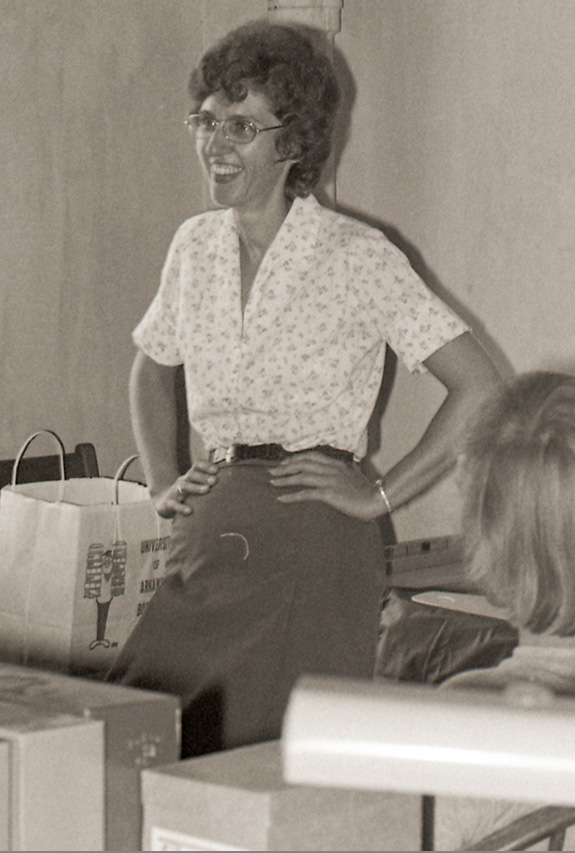
In addition to being a prolific archeologist, she was also a good colleague and friend. George Sabo remembers the first time that he met Martha, at his job interview:
“In the spring of 1979, just a few weeks before departure for my sixth and last trip to Baffin Island in the eastern Canadian Arctic, I was invited by Bob McGimsey and Hester Davis to interview for the Arkansas Archeological Survey’s research station archeologist position in Fayetteville. My interview was to take place at the semi-annual Survey/Society meeting (yes, twice a year at that time), held at DeGray Lake State Park. I flew to Hot Springs Memorial Field airport where Drs. Rolingson and Early picked me up. As I entered the waiting area, Martha and Ann picked me out of the small group of disembarking passengers, looked at each other with a chuckle and slight headshake and politely welcomed me to Arkansas.
During the drive to DeGray, Martha and Ann asked about my interests, and I answered as you might expect an upcoming new PhD to reply, expressing hopeful thrill at the prospects offered by the latest methodological and theoretical developments. Martha turned to me and said that while all of that was well and good, I would be wise to recognize that a primary objective of the Survey, under the McGimsey/Davis paradigm, was to frame research as part of our overall goal to involve members of the interested public and help them appreciate the value of archeology to our understanding of history and culture.
On my return home, I gave much thought to Martha’s advice, which, truth be told, was not an element of the intellectual discourse typical of archeology graduate programs at that time. I thought about it even more when I went back to Baffin Island, this time as a University of Windsor instructor involved in a program developed by several Canadian universities offering summer Northern Studies classes. The class on Arctic climate and culture history that I helped teach with three other colleagues had a diverse audience including college students, interested “adult education” participants, and members of the local Inuit community. Martha’s advice, amplified by questions about how modern science could add to indigenous knowledge held since time immemorial, had a profound impact on how I would approach research for the rest of my career in Arkansas.”
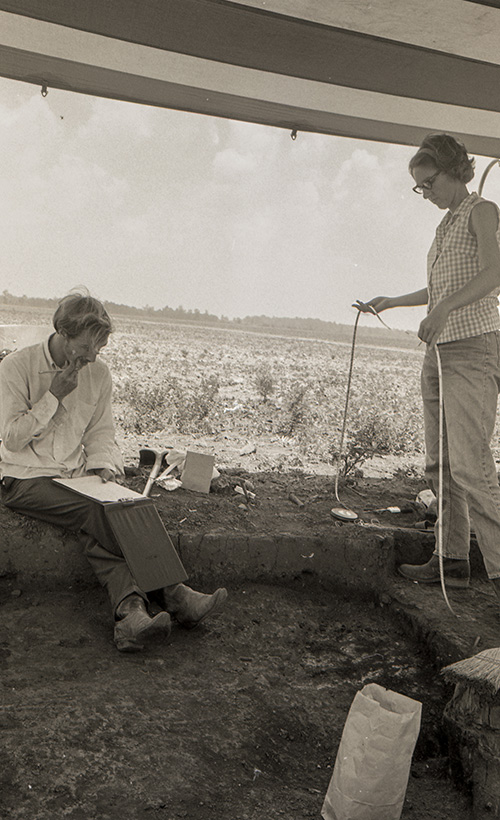
Martha was also an inspiration and mentor for other archeologists at the Survey and may have been the first of an inordinate number of left-handed ARAS archeologists that we’ve employed through the years. Mary Beth Trubitt noted that when she took the job at HSU in the early 2000’s, Martha was working on the artifact analysis and final report about the excavations from Plum Bayou. Mary Beth took note of Martha’s regularly scheduled Lab Days and how she was able to get years’ worth of work done by offering regular opportunities for volunteers to help with the analysis and processing of artifacts.
Martha was an icon beyond Arkansas as well. Jan Campbell, President at Prentice Thomas & Associates (a CRM firm) writes, "I was so intimidated by Martha the first time I met her at a conference in Little Rock. She was talking with Ann Early, who intimidated me just as much. My husband, Prentice Thomas, suggested I go up and introduce myself instead of standing around, gnashing my teeth and biting my nails. When I finally galvanized my bum into action, I discovered they were two of the nicest, most intelligent, and most-willing-to-share archaeologists I’d met thus far in my young career."
Deb Sabo notes that Martha was always kind and never talked “past” or “over” anyone, including the many AAS volunteers that she worked with over the course of her career. She also had a good sense of humor. When Deb put a photo of Martha in a publication backwards, Martha said that she wouldn’t mind, except that it made her look right-handed. Sadly, we don’t have a photo of this, but Beverly Watkins remembers an AAS meeting where she, Martha, Hester, and Ann all sat in the back row working on needlework projects.
Dr. Martha Rolingson’s legacy looms large over the ARAS and the Plum Bayou Research Station and she inspires us to continue to live up to her high level of collaboration, outreach, and academic publishing.
Survey Publications:
Emerging Patterns of Plum Bayou Culture, 1982
Toltec Mounds and Plum Bayou Culture: Mound D Excavations, 1998
Toltec Mounds: Archeology of the Mound-and-Plaza Complex, 2012